In astrophysics, the Eddington number, NEdd, is the number of protons in the observable universe. Eddington originally calculated it as about 1.57×1079; current estimates make it approximately 1080.
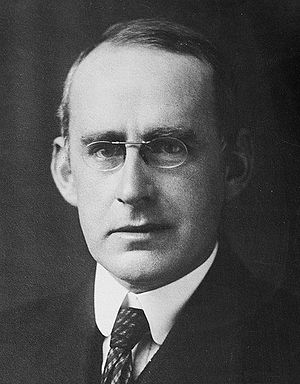
The term is named for British astrophysicist Arthur Eddington, who in 1938 was the first to propose a value of NEdd and to explain why this number might be important for physical cosmology and the foundations of physics.
History
Eddington argued that the value of the fine-structure constant, α, could be obtained by pure deduction. He related α to the Eddington number, which was his estimate of the number of protons in the universe.[1] This led him in 1929 to conjecture that α was exactly 1/137.[2] Other physicists did not adopt this conjecture and did not accept his argument.
In the late 1930s, the best experimental value of the fine-structure constant, α, was approximately 1/136. Eddington then argued, from aesthetic and numerological considerations, that α should be exactly 1/136. He devised a "proof" that NEdd = 136 × 2256, or about 1.57×1079.
Current estimates of NEdd point to a value of about 1080.[3] These estimates assume that all matter can be taken to be hydrogen and require assumed values for the number and size of galaxies and stars in the universe.[4]
Attempts to find a mathematical basis for this dimensionless constant have continued up to the present time.
During a course of lectures that he delivered in 1938 as Tarner Lecturer at Trinity College, Cambridge, Eddington averred that:
This large number was soon named the "Eddington number".
Shortly thereafter, improved measurements of α yielded values closer to 1/137, whereupon Eddington changed his "proof" to show that α had to be exactly 1/137.[6]
Recent theory
The most precise value of α (obtained experimentally in 2012) is:[7]

Consequently, no reliable source any longer maintains that α is the reciprocal of an integer. Nor does anyone take seriously a mathematical relationship between α and NEdd.
On possible roles for NEdd in contemporary cosmology, especially its connection with large number coincidences, see Barrow (2002) (easier) and Barrow and Tipler (1986: 224–31) (harder).
| This article uses material from the Wikipedia article Metasyntactic variable, which is released under the Creative Commons Attribution-ShareAlike 3.0 Unported License. |